What Is a Chimney Liner and Why Does It Matter?
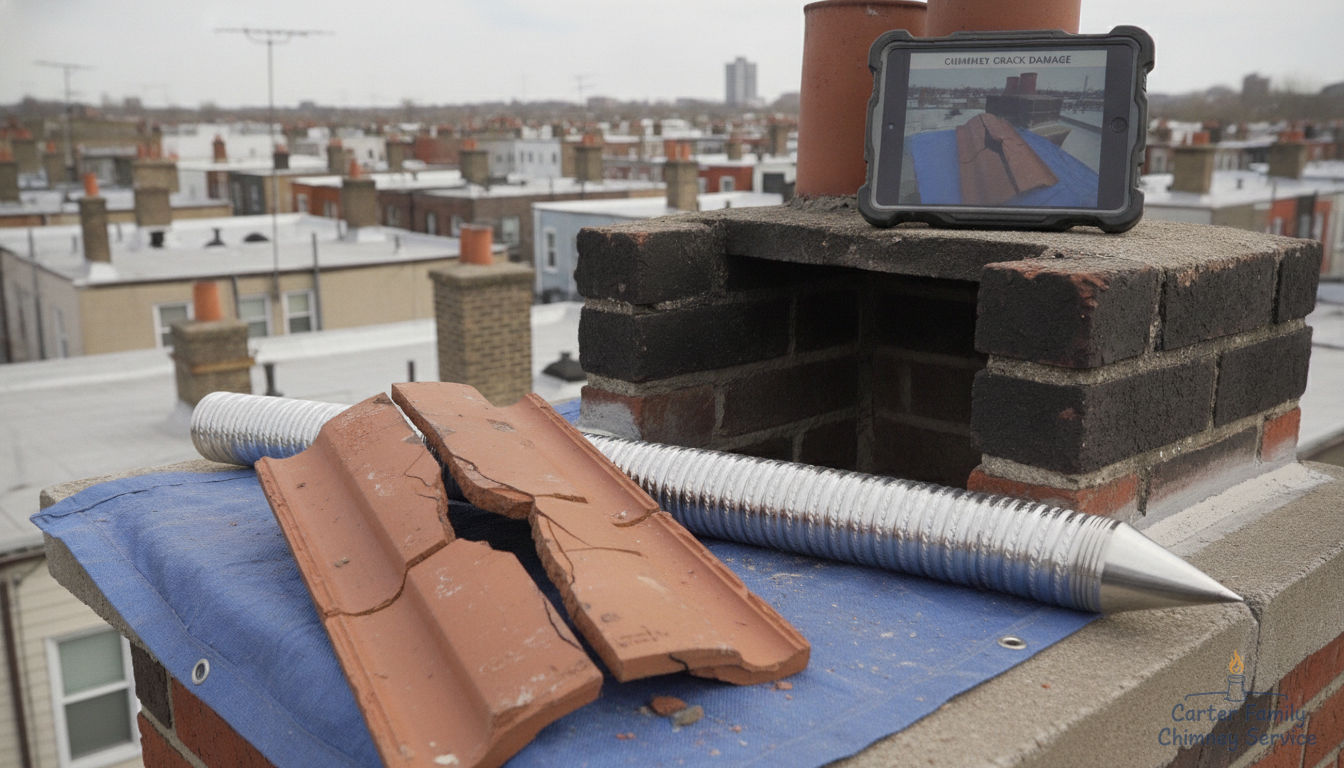
The chimney liner is the interior passageway running from the firebox or appliance connection at the bottom of your chimney all the way to the flue opening at the top. Its job is threefold: it contains hot combustion gases so they cannot leak into surrounding framing and insulation, it maintains the correct internal diameter to produce proper draft, and it shields the surrounding masonry from the corrosive acidic byproducts produced by burning wood, oil, or gas. In older Queens-area homes — many of which were built before modern building codes required liners — the flue may be completely unlined, or it may be lined with clay tile sections that have cracked and separated over decades of heat cycling and freeze-thaw stress.
A compromised liner is not just a code violation — it is an active fire and carbon monoxide hazard. If you have never had your liner professionally inspected, scheduling a Level 2 chimney inspection with a video scan is the first step toward understanding the condition of this critical component.
Common Warning Signs of Chimney Liner Failure
Because the liner is hidden inside the masonry stack, homeowners often do not realize there is a problem until damage has already become extensive. Watch for these warning signs:
- White staining (efflorescence) on exterior brickwork — mineral salts being pushed through the masonry by water penetrating through liner cracks
- Smoke or carbon monoxide odors inside the home — combustion gases escaping through cracks in the liner rather than venting to the outside
- Spalling or deteriorating bricks on the chimney exterior — heat and moisture escaping the liner and attacking the surrounding masonry
- A recent heating appliance change — switching from oil to gas, or adding a wood stove insert, requires a liner properly sized to the new appliance
- A history of chimney fires — even a small chimney fire can crack clay tile liner sections throughout the full height of the stack
Clay Tile vs. Stainless Steel: Understanding Your Liner Options
Most Queens homes built between the 1920s and 1970s were constructed with clay tile chimney liners. While clay tile performs reasonably well when maintained, it is rigid and brittle — vulnerable to cracking from thermal shock and freeze-thaw cycles. Once tiles crack, hot gases and moisture can permeate the surrounding masonry and eventually reach combustible building materials.
Carter Family Chimney Service installs UL-listed flexible stainless steel liner systems that adapt to the existing flue path, accommodate offsets, and deliver a seamless continuous interior surface that clay tile cannot match. Stainless steel liners are available in grades suited for wood-burning fireplaces, gas appliances, and oil furnaces, and when properly insulated they significantly improve draft efficiency. For chimneys with severe structural deterioration, cast-in-place liner systems bond directly to the masonry walls to create a smooth, reinforced flue. Our chimney liner installation process always begins with a full video inspection so we can select the correct liner diameter and document existing conditions before any work begins.
The Oil-to-Gas Conversion Relining Requirement
One of the most common reasons Queens homeowners need a new chimney liner is a fuel conversion. Tens of thousands of homes in the borough were originally heated by oil-fired boilers venting through older clay tile flues. When those systems are converted to high-efficiency gas appliances — which burn cooler and produce significantly more moisture — the existing liner is often too large in diameter and too porous to handle the new venting requirements. Gas flue gases that cool inside an oversized liner condense into corrosive liquid that rapidly attacks clay tile joints and surrounding mortar. A properly sized stainless steel liner matched to the new gas appliance solves this problem completely.
Liner Service Areas in Queens
Carter Family Chimney Service provides chimney liner installation in South Richmond Hill and throughout Queens, including Richmond Hill, Jamaica, Ozone Park, Woodhaven, Kew Gardens, and Howard Beach. We are available Monday through Sunday from 8:00 AM to 6:00 PM.
After liner installation, we provide complete written documentation suitable for your insurance carrier and any required permit files, and we pair every new liner with a thorough chimney sweep and cleaning to leave your entire system ready for safe use. Call Carter Family Chimney Service at (929) 356-7855 or email [email protected] to schedule your liner assessment.
Confirm Availability
Call +19293567855 or fill out our online form for a free, no-obligation quote.
Request Free Quote